
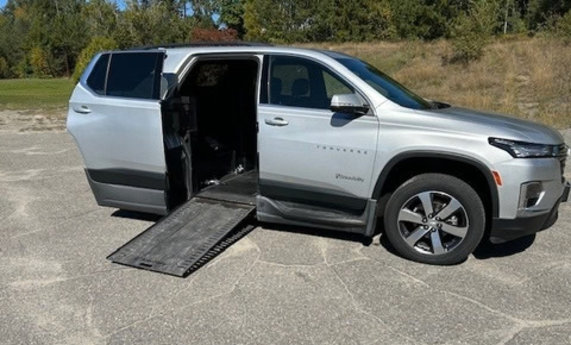
2022 Chevrolet Traverse 3LT

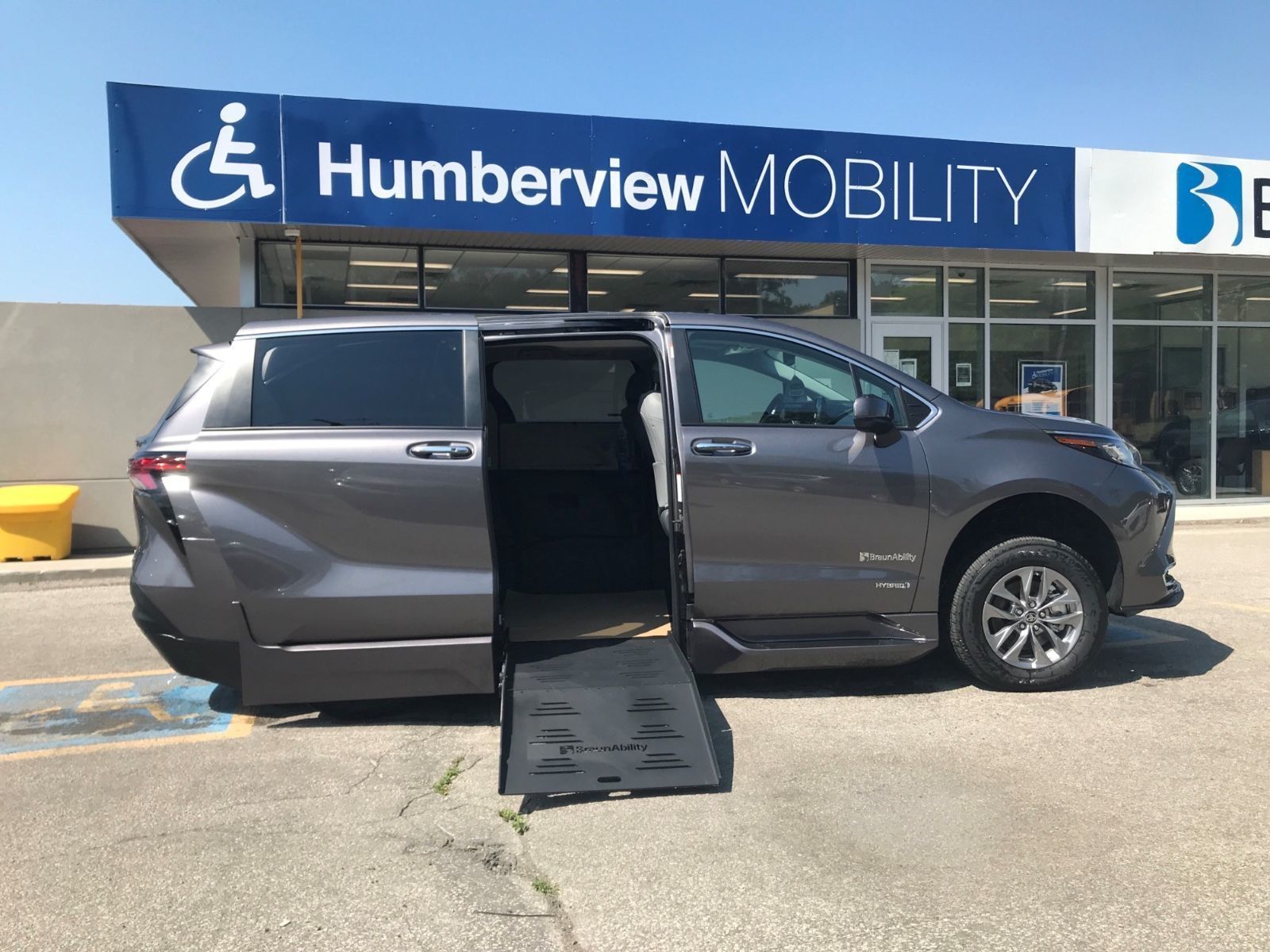
Choosing an accessible vehicle starts with one practical question: how will the wheelchair get inside? The answer shapes everything else, from the vehicle you pick to where you park and who helps with daily trips.
Most families narrow it down to two paths. A ramp conversion lets the wheelchair user roll into a minivan with a lowered floor and ride in the chair. A power lift loads the empty wheelchair or scooter after the user moves to a vehicle seat.
|
Feature |
Ramp Conversion |
Power Lift |
|
How the user boards |
Rolls up the ramp and stays in the wheelchair |
Transfers to a vehicle seat |
|
What the system carries |
The rider in the wheelchair |
The empty wheelchair or scooter |
|
Vehicle changes |
Lowered floor, often with kneeling suspension |
A hoist, platform or truck cap is added |
|
Vehicle types |
Minivans and full-size vans |
Cars, SUVs, minivans, vans and pickup trucks |
|
Best fit |
Riders who stay seated in the chair |
Drivers and passengers who can transfer |

A ramp conversion lowers the vehicle floor. This shrinks the height difference at the door and adds seated headroom inside. The rider rolls up the ramp and stays in the wheelchair for the whole trip.
Popular minivans for ramp conversions include the Chrysler Pacifica, Chrysler Grand Caravan, Toyota Sienna and Honda Odyssey. The Sienna is sold in Mobility models preconfigured for BraunAbility or VMI conversions, with features like automatic suspension kneeling, a lightweight automatic ramp, removable seating and a lowered floor.
Full-size vans like the Ford Transit, Ram ProMaster and Mercedes-Benz Sprinter add interior room for larger groups and commercial use.
Kneeling suspension lowers the van at the door, which flattens the ramp angle and makes the climb easier. Ramps also differ in where they stow and how they deploy:
A side-entry ramp deploys through the sliding door. This layout opens up front-row wheelchair positions, so the wheelchair user can ride up front. It needs clear space alongside the sliding door for the ramp and the approach.
A rear-entry ramp deploys through the rear hatch, and the wheelchair rides in the middle or rear of the van. It helps in narrow spaces, though it still needs a clear approach behind the vehicle.
For example, a VMI Toyota Sienna rear-entry conversion needs about 2.4 m (8 ft) of space behind the van, plus another 1.2 m (4 ft) when someone assists.

Some drivers and passengers can move from the wheelchair or scooter to a regular seat. For them, a power lift carries only the empty device. Nobody rides on it, so the choice of vehicle widens to cars, SUVs, minivans, vans and pickup trucks.
A powered transfer seat can make the move from wheelchair to vehicle seat easier. Bruno lifts handle most mobility scooters, manual wheelchairs and power chairs, and they fit vans, SUVs, cars and pickup trucks.
Lift fit depends on the device’s size and weight, along with the size of the vehicle’s cargo opening. Measure the chair or scooter before you settle on a lift.
In a ramp van, a four-point tiedown system straps the chair to four floor anchors. On a WC19 crash-tested wheelchair, use the four marked securement points, remove all slack, and never attach straps to adjustable, moving or removable parts.
A docking system uses a bracket under the wheelchair that locks into a floor base, so the rider can secure the chair without help. In both setups, the rider also wears a lap and shoulder belt against the body.
With a power lift, the empty wheelchair or scooter needs proper restraint for travel too.

Power ramps have a manual backup for electrical failures. Each system works differently, so learn your backup steps at delivery and keep the owner’s manual in the vehicle.
Road salt, sand, snow and temperature extremes can call for more frequent inspections of ramps and lifts. Follow the service schedule in your owner’s manual and book a check after a hard winter.
Ontario’s Home and Vehicle Modification Program, administered by March of Dimes Canada, lets eligible residents apply for up to $15,000 in vehicle modifications every 10 years. Eligible items include ramps, storage hoists, lowered floors, hand controls and transfer seating.
Costs incurred before authorization are not reimbursed, so apply before any work begins.
Federal relief also helps. Qualifying vehicle adaptation services are charged GST/HST at 0%. On a vehicle purchase, the GST/HST paid on the adaptation portion can be rebated through form GST518 once the supplier identifies that portion in writing.

A ramp conversion suits a wheelchair user who rides in the chair for every trip. It also suits families who want everyone, including the wheelchair user, travelling together in the main cabin.
A power lift suits a driver or passenger who can transfer to a vehicle seat. It keeps cars, SUVs and pickup trucks on the table, along with minivans and vans.
The chair’s size and weight, the rider’s seated height and your parking space all shape the right choice. A fit assessment with your occupational therapist and a mobility specialist brings these together before you buy.
The right access system depends on the rider, the chair and your daily routine. At Humberview Mobility in Toronto, the team works with you, your family and your healthcare professionals to compare ramp conversions and power lifts and guide you through funding applications.
Certified technicians handle installation, repairs and routine maintenance once you’re on the road. Book your fit assessment at Humberview Mobility today and choose your wheelchair van with confidence.
Other customers are interested in:
2022 Chevrolet Traverse 3LT
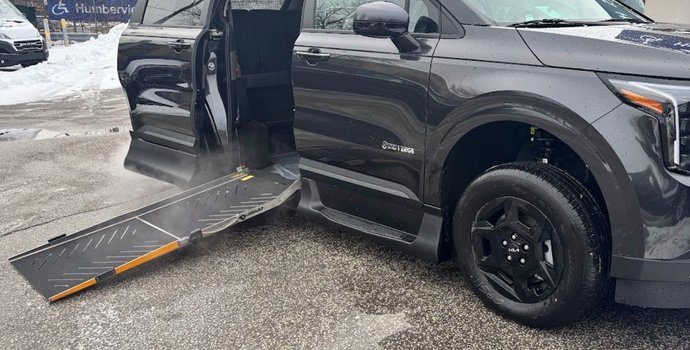
Fall Maintenance Checklist for Your Wheelchair Accessible Van: 5 Tips to Keep It Road-Ready
Fall brings shorter days, wet leaves on the pavement, and a real drop in overnight temperatures across Ontario. For a wheelchair accessible van, that shift puts extra strain on the ramp, lift, tires, and heating system all at once. A few practical checks now can prevent a lot of frustration once winter driving conditions set in. Here are five maintenance steps that apply whether your conversion...
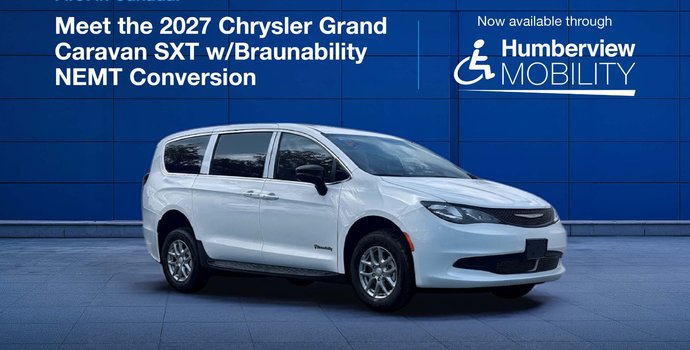
BraunAbility NEMT Vehicle Arrives in Canada Through Humberview Mobility
Humberview Mobility is proud to be the first Canadian dealer to offer the BraunAbility NEMT vehicle, bringing a purpose-built wheelchair- and stretcher-accessible transportation solution to Canadian non-emergency medical transportation (NEMT) operators. The 2027 Chrysler Grand Caravan SXT with BraunAbility Rear Entry NEMT Conversion represents an exciting addition to BraunAbility’s...
