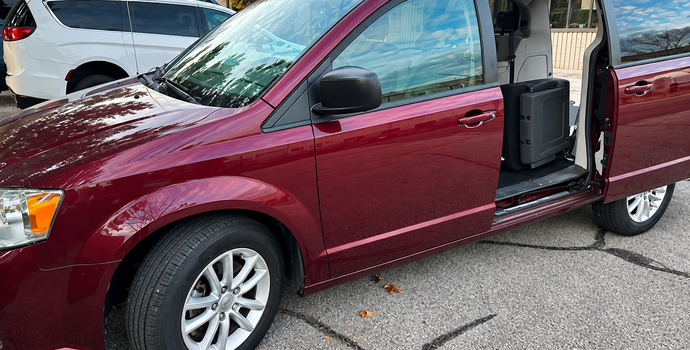
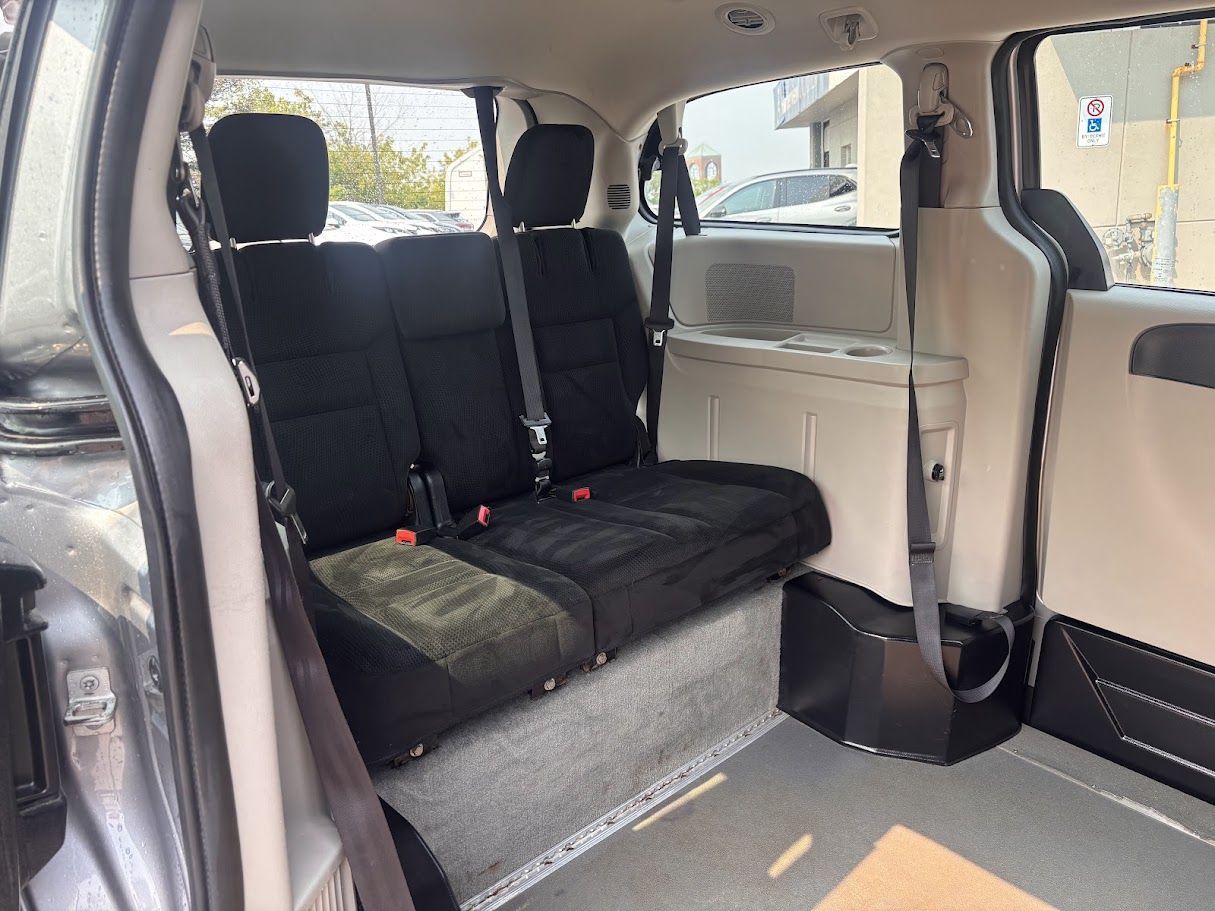
2018 Dodge Grand Caravan SE Plus w/ Move Mobility Manual Rear Entry Conversion


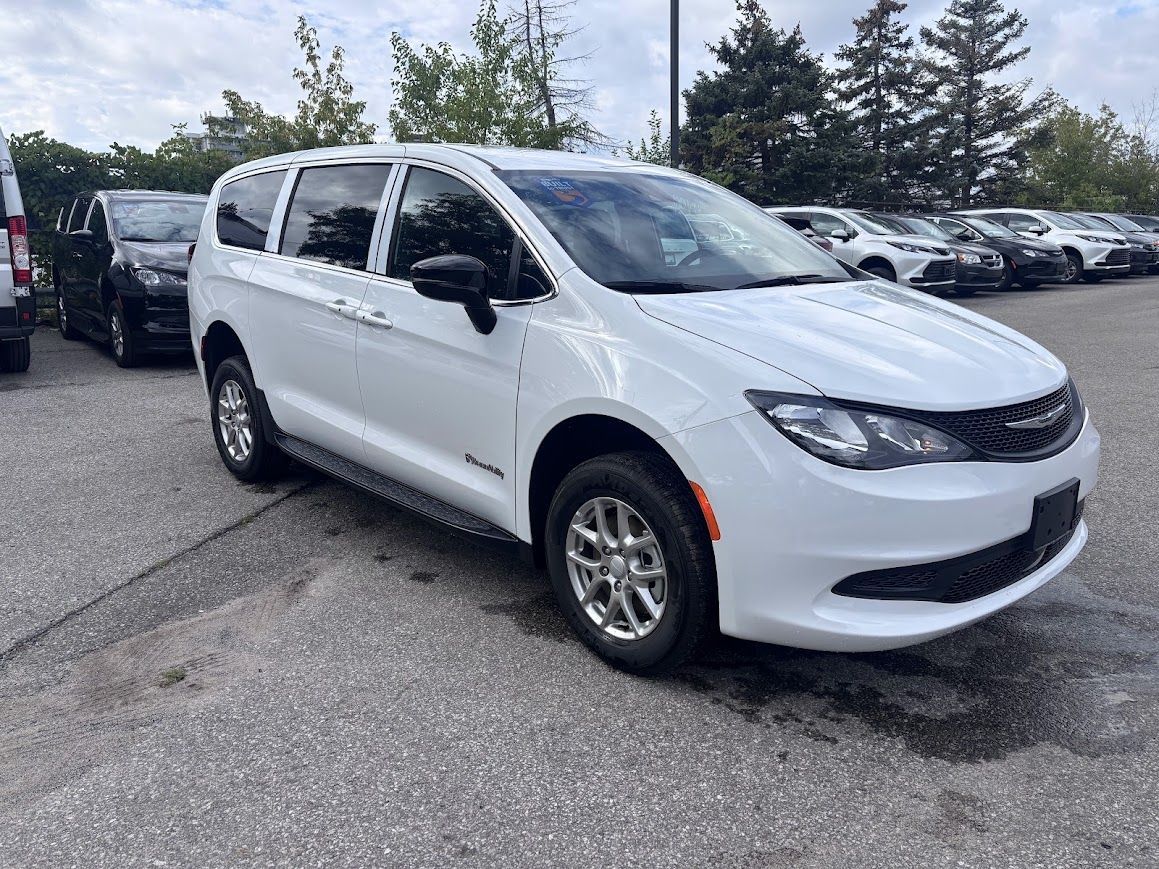
Buying a wheelchair-accessible vehicle brings up a lot of questions at once. Which door should the ramp use? Can the wheelchair user drive? What should you look for in a used conversion, and who helps pay for the equipment?
This guide answers the questions buyers and families ask most often. Each answer starts from the same three things: the wheelchair, the person using it and the way you travel every day.
|
Question |
What to Check |
Who Helps |
|
Which entry layout fits? |
Parking space, seating position and driving plans |
Mobility specialist |
|
Minivan, full-size van or transfer seat? |
Wheelchair size, passenger count and transfer ability |
Occupational therapist and mobility specialist |
|
Can I drive from my wheelchair? |
Functional driving assessment results |
Occupational therapist and driving instructor |
|
Is a pre-owned conversion a good buy? |
Chassis history, conversion history and equipment operation |
Certified technician |
|
How is the wheelchair secured? |
Tiedowns or docking, plus a lap and shoulder belt |
Mobility specialist |
|
How often does equipment need service? |
The owner’s manual schedule and winter use |
Certified technician |
|
What about funding and insurance? |
Grant rules, tax credits and insurer disclosure |
Program administrator and insurer |
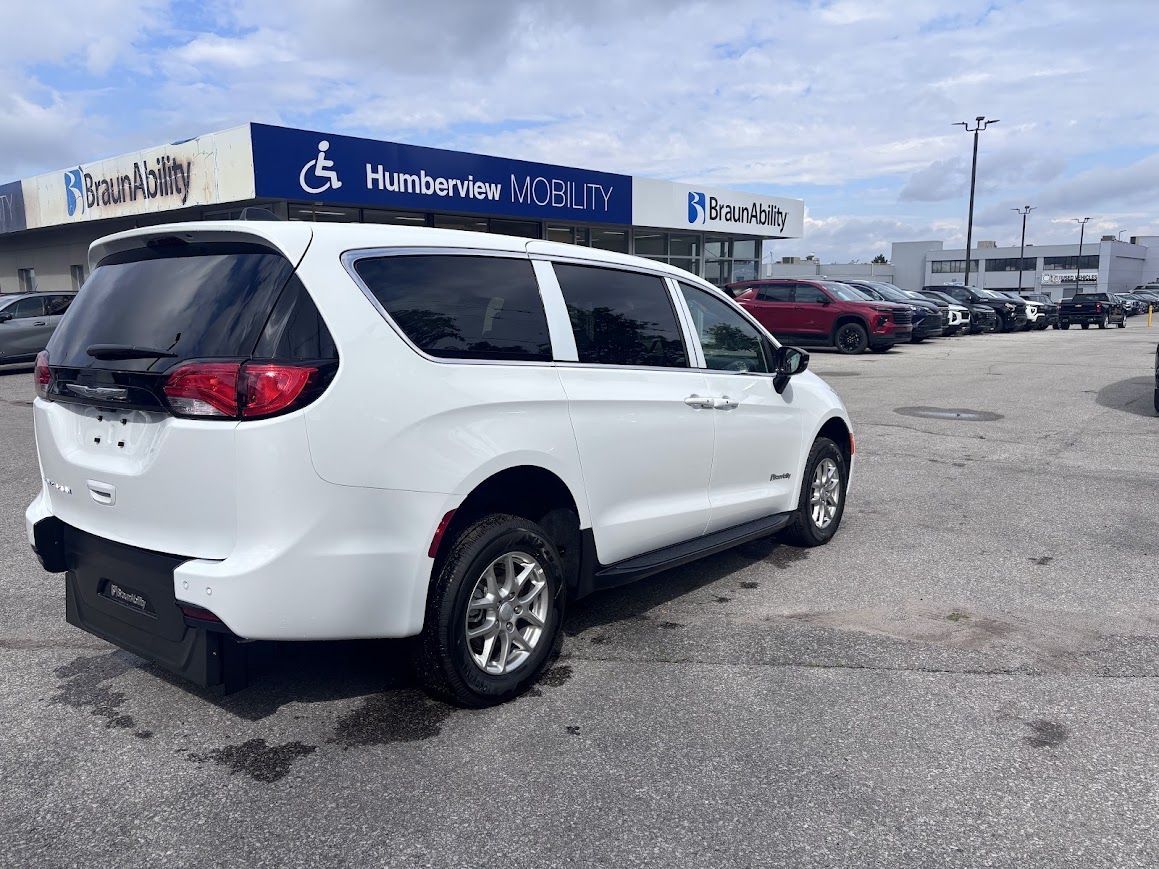
A side-entry conversion uses the passenger-side sliding door, a lowered floor and a ramp. Some side-entry layouts have removable front seats, so the wheelchair user can ride or drive from the front. The ramp needs clear space beside the vehicle, so test the spots where you park most.
A rear-entry conversion loads through a ramp at the back, with a straight route to a second-row wheelchair position. It suits caregiver-assisted travel and works well in narrow spaces, though the area behind the vehicle still needs room for the ramp and the wheelchair.
Typical rear-entry minivan layouts do not offer front-seat wheelchair access. If the wheelchair user plans to drive from the chair, start with a side-entry layout.
Minivans like the Chrysler Pacifica, Chrysler Grand Caravan, Toyota Sienna and Honda Odyssey are popular for BraunAbility and VMI conversions. They fit in standard garages and parking spaces and work well for everyday family driving.
Full-size vans like the Ford Transit, Ram ProMaster and Mercedes-Benz Sprinter have a larger footprint. They give more room to move inside, more storage and space for several mobility-device users or extra passengers.
If the wheelchair user can move to a vehicle seat, a turning and lowering transfer seat swivels out and lowers toward wheelchair height. A Bruno or Smart Lifter lift then stows the empty wheelchair or scooter. Bring your own chair to compare each option.
Yes. A side-entry vehicle with a removable driver’s seat and the right adaptive controls lets a driver operate the vehicle from the wheelchair. The controls are chosen to match the driver’s assessed abilities:
In Ontario, a functional driving assessment includes a medical assessment and an on-road evaluation. An occupational therapist and a qualified driving instructor carry it out. OHIP and the Ministry of Transportation do not pay for these formal assessments; the person being assessed covers the cost.
A driver’s licence can carry a condition requiring a specific device to be installed and used. Complete the assessment before choosing controls, so the vehicle matches the recommendations.
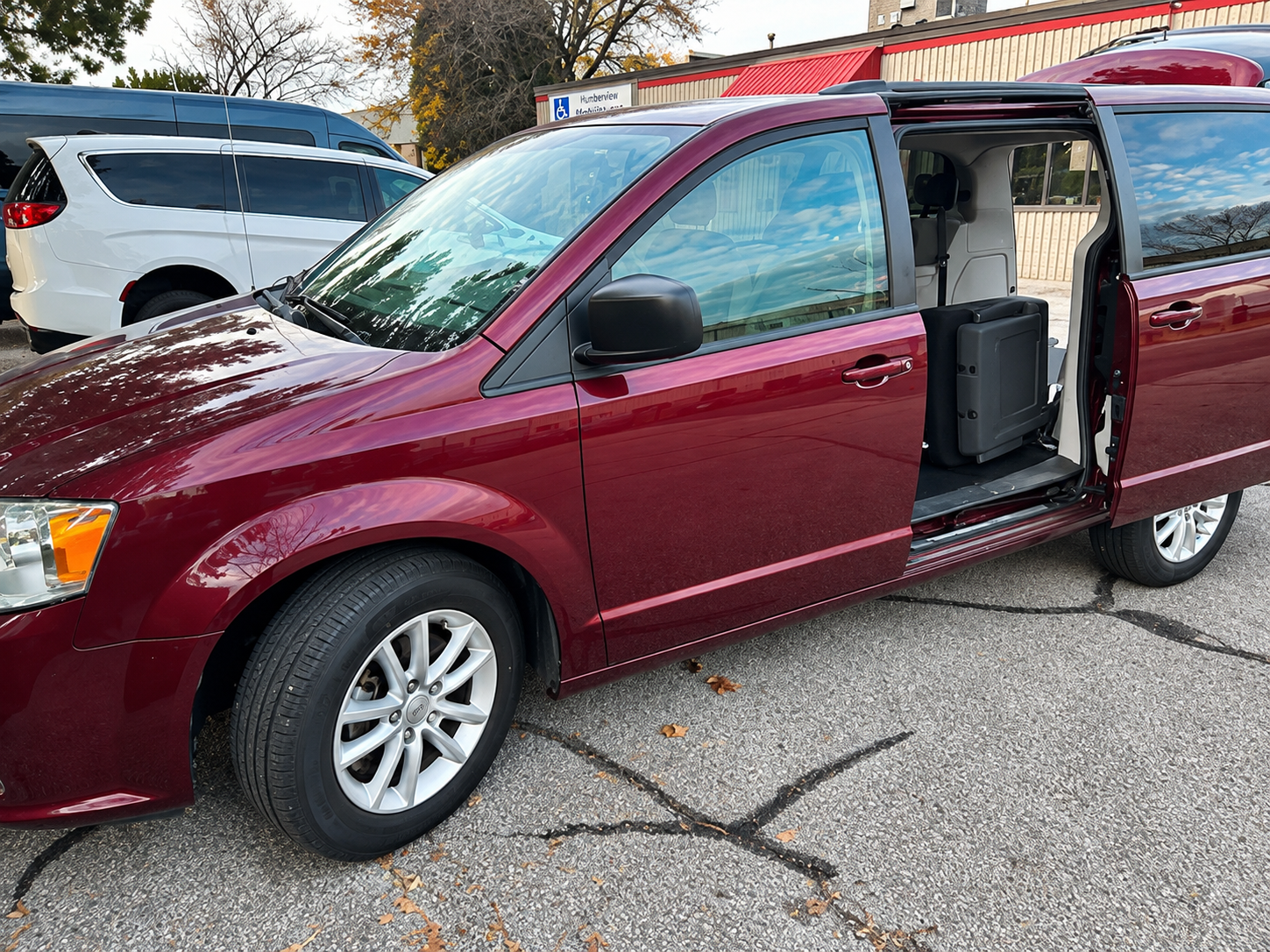
A used wheelchair-accessible vehicle has two histories: the vehicle itself and the conversion. Ask for both, then check these points:
A Safety Standards Certificate covers the vehicle’s roadworthiness. It does not inspect the conversion. Test the ramp and the layout with your own wheelchair and your usual passengers before you commit.
A vehicle modified in the United States is not automatically admissible in Canada. Proof that the modifier has established Canadian compliance is required, so confirm it before you buy for import.
A four-point tiedown system straps the wheelchair to four anchor points in the floor. A WC19 wheelchair is crash-tested for use as a vehicle seat and has four marked securement points. Never attach tiedowns to adjustable, removable or moving parts of the chair.
A docking system uses a bracket under the wheelchair that locks into a base on the vehicle floor, so the rider can secure the chair without help. The wheelchair and the docking system must be compatible.
Securing the chair and belting in the rider are separate jobs. The rider needs a properly fitted lap and shoulder belt. A wheelchair positioning belt does not replace a crash-tested occupant restraint.
Each conversion, lift and transfer seat has its own service schedule, set by time and use in its owner’s manual. Follow that schedule, keep your service records, and book the work with certified technicians who know your equipment.
Snow, road salt, sand and temperature extremes call for more frequent checks. Plan an inspection after a hard winter, even when the equipment seems to work normally.
Ontario’s Home and Vehicle Modification Program, administered by March of Dimes Canada, lets eligible applicants apply for up to $15,000 in vehicle modifications every 10 years. Eligibility depends on permanent Ontario residency, financial need and a lasting disability that restricts mobility.
Funding is not guaranteed, and costs incurred before authorization are not reimbursed. Apply before any work begins. A complete package includes the signed application, your latest Notice of Assessment, disability verification and an itemized quote.
On your federal tax return, an adapted van counts as an eligible medical expense up to the lesser of $5,000 or 20% of its purchase price, excluding eligible adaptation costs. The van must be adapted within six months of purchase. Qualifying adaptation costs are claimed separately.
The medical expense tax credit reduces the tax you owe. It does not repay the full cost, so keep every receipt and any required prescriptions.
Tell your insurer or broker about the conversion and the adaptive equipment. Ask for written confirmation of the coverage, the valuation basis, the limits and the deductibles.
Every answer starts with the rider, the wheelchair and your daily routine. Visit Humberview Mobility in Toronto with your wheelchair or mobility device, your usual passengers and any driving assessment recommendations.
The team walks you through entry layouts, transfer seats and adaptive controls, and helps you prepare for funding applications. Certified technicians look after service once you’re on the road. Book your consultation at Humberview Mobility and get clear answers in person.
Other customers are interested in:
2018 Dodge Grand Caravan SE Plus w/ Move Mobility Manual Rear Entry Conversion
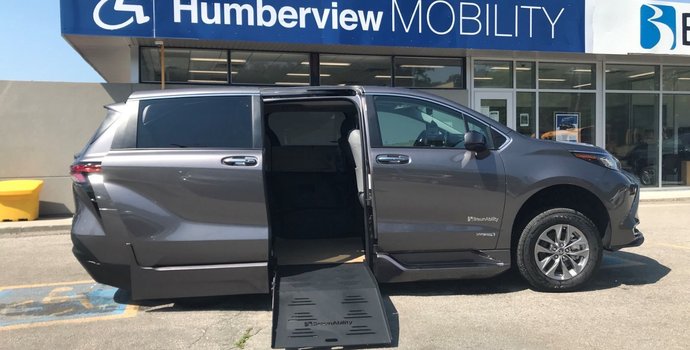
Wheelchair Van Ramp vs. Power Lift: How to Choose
Choosing an accessible vehicle starts with one practical question: how will the wheelchair get inside? The answer shapes everything else, from the vehicle you pick to where you park and who helps with daily trips. Most families narrow it down to two paths. A ramp conversion lets the wheelchair user roll into a minivan with a lowered floor and ride in the chair. A power lift loads the empty...
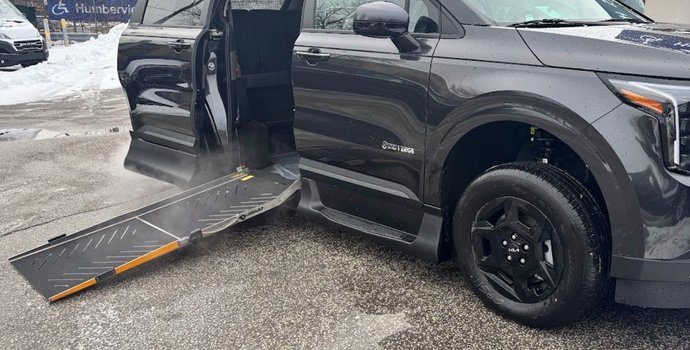
Fall Maintenance Checklist for Your Wheelchair Accessible Van: 5 Tips to Keep It Road-Ready
Fall brings shorter days, wet leaves on the pavement, and a real drop in overnight temperatures across Ontario. For a wheelchair accessible van, that shift puts extra strain on the ramp, lift, tires, and heating system all at once. A few practical checks now can prevent a lot of frustration once winter driving conditions set in. Here are five maintenance steps that apply whether your conversion...
