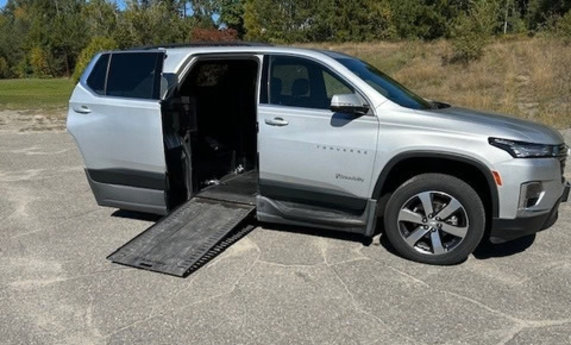
2022 Chevrolet Traverse 3LT

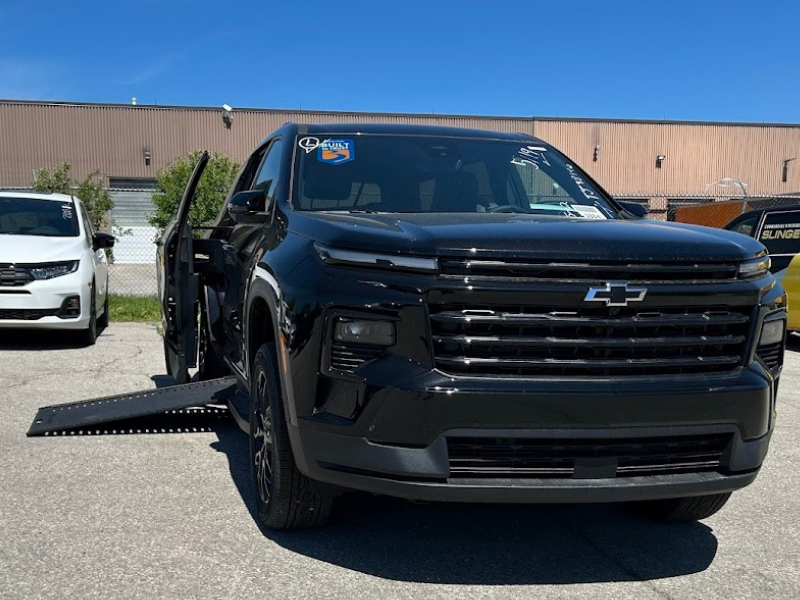
If you’re researching mobility options after an injury, a diagnosis, or simply getting older, one question comes up fast: Does an adapted vehicle need its own licence class? The answer surprises a lot of Ontario drivers, and it changes how you plan for hand controls, a swivel seat, or a lowered floor.
Have Questions? Connect with Our Mobility Specialist Today for Personalized Assistance and Expert Guidance!
Contact UsNo. Ontario does not issue a distinct licence class for personal-use adapted vehicles. A driver using hand controls, a left-foot accelerator, a ramp, or a lowered floor generally keeps their standard Class G licence.
What can change is whether that licence carries conditions. A licence class defines the broad category of vehicle you’re permitted to operate (Class G for a standard passenger car, for example). Licence conditions are narrower notes attached to that same class, spelling out equipment or restrictions the driver must use, such as “automatic transmission only” or “hand controls required.”
In practical terms, an adapted vehicle in Ontario is any personal vehicle modified with equipment like hand controls, a left-foot accelerator, a spinner knob, a swivel seat, a lowered floor, or a wheelchair ramp. None of these modifications, on their own, change what licence class the driver holds.

Under the Highway Traffic Act, physicians, nurse practitioners, and optometrists must report patients to the Ministry of Transportation’s Registrar when a cognitive, motor, sensory, sudden-incapacitation, or visual condition could affect safe driving. Ontario Regulation 340/94 sets the medical and vision standards behind those reports.
Once a report reaches the MTO, the Driver Medical Review Office decides whether more information is needed. For many drivers, that means a functional assessment: a medical exam paired with an on-road evaluation, usually run by an occupational therapist and a driving instructor at an approved Functional Assessment Centre.
The review exists to answer specific, practical questions: can this driver operate a vehicle safely, and if so, does that safety depend on a device like hand controls or a left-foot accelerator? Some cases, particularly stroke or dementia-related concerns, use the DriveABLE program, a roughly two-hour test combining cognitive and road components, offered at centres such as Parkwood Institute.
After an assessment, the MTO issues one of a few outcomes: the licence is reinstated with no restriction, reinstated with a condition code, downgraded, or suspended until the driver meets certain requirements.
Condition codes group by how they change control of the vehicle rather than by the medical diagnosis behind them. Common examples include automatic transmission only, hand controls required, or left-foot accelerator required. An occupational therapist typically determines which adaptive devices a driver needs and issues the prescription an installer follows.
This is why the driver’s licence status matters more than the vehicle itself. The same wheelchair-accessible van can be driven safely by one person under a hand-controls condition and by another with no condition at all. It depends entirely on what the assessment found for that individual.
One real-world nuance worth knowing: if a driver is tested using an adaptive device, such as a left-foot accelerator, the resulting licence carries a permanent restriction noting that device. Amputees, stroke survivors, and drivers with mobility impairments are often asked to demonstrate safe driving with or without the equipment before that restriction is set.

Personal use is where the standard Class G licence applies regardless of vehicle modifications, provided any required condition is met. Commercial and passenger-service driving follows different rules entirely.
Operating a larger vehicle to transport passengers with disabilities on a commercial basis requires a Class F licence, not a standard Class G. That distinction deserves its own attention because it’s the one case in Ontario where an adapted-vehicle scenario genuinely does require a different licence class, not just a condition.

Start by confirming your current licence status with the MTO, including whether any conditions are already attached. If you’ve had a recent medical change, your physician or optometrist may already be required to report it.
Next, confirm that any adaptation installed in your vehicle, hand controls, a swivel seat, a ramp, matches what your licence actually authorizes. A vehicle fitted with hand controls does you no good if your licence doesn’t reflect that requirement, or if it was issued without the assessment that would confirm you can drive safely with them.
If you’re funding equipment, note that programs like March of Dimes Canada’s Home and Vehicle Modification Program can support eligible Ontario residents with up to $15,000 every 10 years toward adaptive equipment, separate from any licensing step.
Licence conditions, not a separate licence class, are how Ontario matches adapted vehicles to the drivers who use them. Understanding that distinction helps you plan the right equipment before you commit to any modification.
Visit Humberview Mobility in Toronto to talk through adapted-vehicle options in Ontario and how they fit alongside your current licence status. Our team can walk you through what’s available for your specific mobility needs.
You might also be interested in these blogs:
10 Tips for Choosing the Right Wheelchair-Accessible Vehicle in Ontario
2026 Commercial Accessible Vehicle Buying Guide for Ontario Fleets
5 Mobility Conversions Specific to Pickups Explained in Detail
Other customers are interested in:
2022 Chevrolet Traverse 3LT
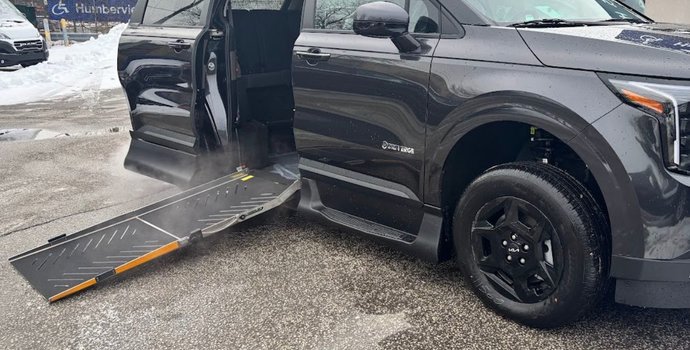
Fall Maintenance Checklist for Your Wheelchair Accessible Van: 5 Tips to Keep It Road-Ready
Fall brings shorter days, wet leaves on the pavement, and a real drop in overnight temperatures across Ontario. For a wheelchair accessible van, that shift puts extra strain on the ramp, lift, tires, and heating system all at once. A few practical checks now can prevent a lot of frustration once winter driving conditions set in. Here are five maintenance steps that apply whether your conversion...
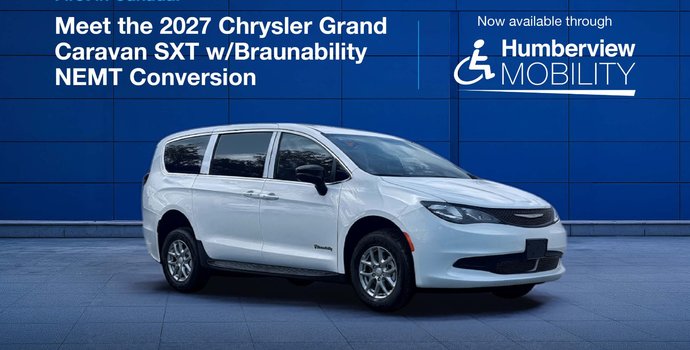
BraunAbility NEMT Vehicle Arrives in Canada Through Humberview Mobility
Humberview Mobility is proud to be the first Canadian dealer to offer the BraunAbility NEMT vehicle, bringing a purpose-built wheelchair- and stretcher-accessible transportation solution to Canadian non-emergency medical transportation (NEMT) operators. The 2027 Chrysler Grand Caravan SXT with BraunAbility Rear Entry NEMT Conversion represents an exciting addition to BraunAbility’s...